Personal accountability is a silent struggle. Without immediate consequences, vague goals like "I'll start tomorrow" are easily discarded. One Dollar Promise was engineered to solve this by introducing a tangible cost to procrastination. It transforms high-level intentions into a binary commitment loop—where every promise is backed by a $1 stake.
The goal was to build a friction-free "Self-Binding" mechanism. By combining a low-stakes financial penalty with a time-locked verification process, the app leverages the psychological principle of Loss Aversion to increase follow-through.
I solo-founded and built One Dollar Promise to demonstrate my ability to take a product from a conceptual design system to a production-ready Full-Stack deployment. The project showcases a unified design-to-code pipeline, secure real-time data management, and a robust payment infrastructure.
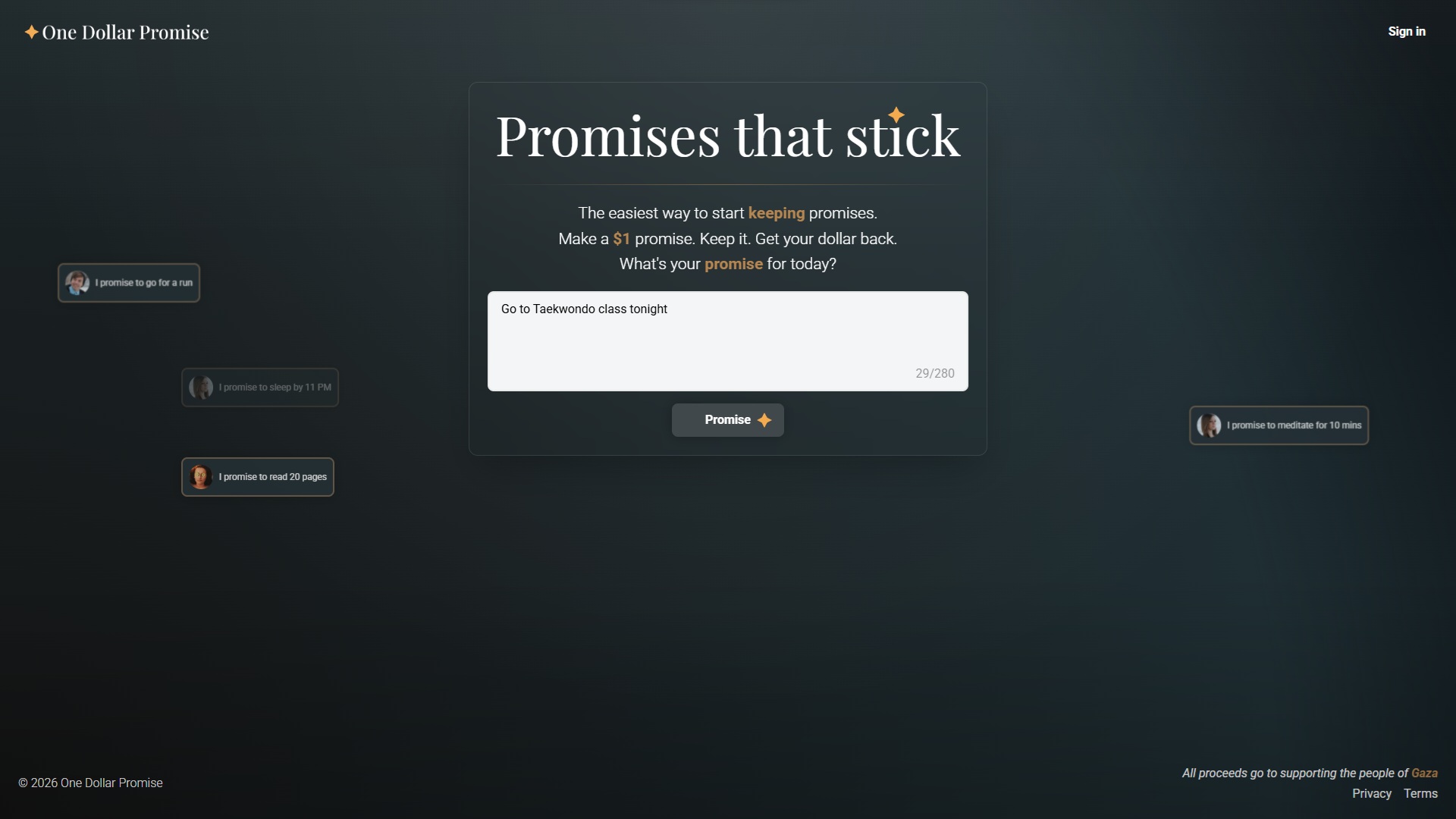
We set out to design a high-fidelity web experience that prioritizes trust, speed, and emotional resonance. The digital experience needed to feel professional yet accessible—lowering the barrier to entry while making the "stake" feel significant.
At the heart of One Dollar Promise is a secure, three-step commitment loop:
This "Loss Aversion" loop is built to foster a culture of reliability, turning standard habit-tracking into a high-stakes interactive experience.
Our priorities included:
The "Intent-to-Action" Gap Users often sign up for habit trackers but fail to return after the first day because there is no cost to quitting. → We introduced Financial Loss Aversion. By staking even a nominal $1, the psychological cost of failure shifts from "abstract disappointment" to "tangible loss," significantly increasing follow-through.
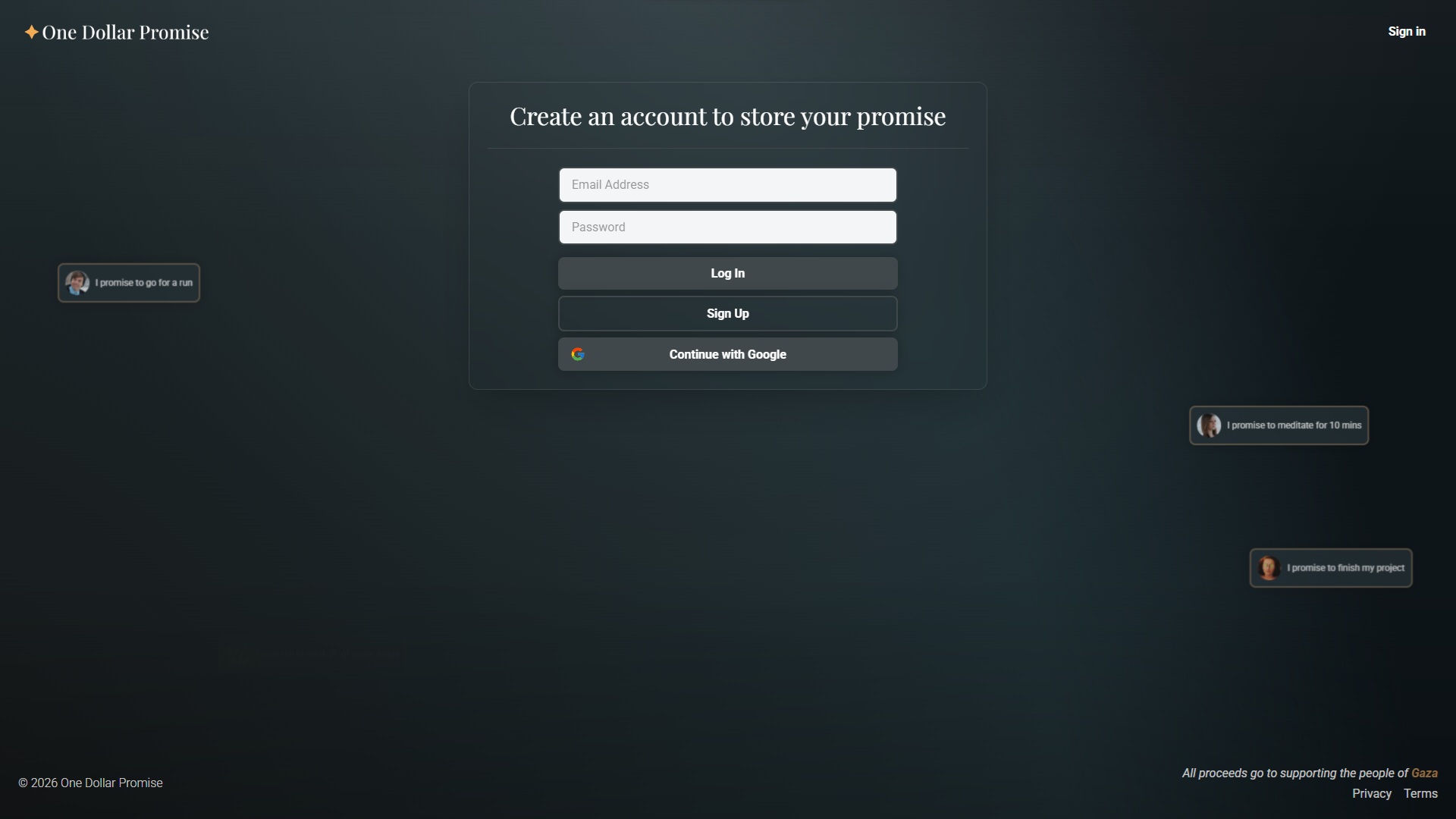
Building High-Trust Interactions Financial applications require a high level of perceived security and UI polish to encourage user participation. → I developed a Glassmorphic Design System that feels modern and premium. Combined with a robust Supabase RLS (Row Level Security) backend, the app ensures that user data and financial commitments are handled with enterprise-grade security.
Translating Design to Robust Code Maintaining design fidelity while ensuring a performant, maintainable codebase is a common bottleneck in product development. → I utilized a Token-based Design Pipeline. Every spacing, color, and component variant defined in Figma was mapped to CSS variables and React components, allowing for rapid UI iteration without technical debt.