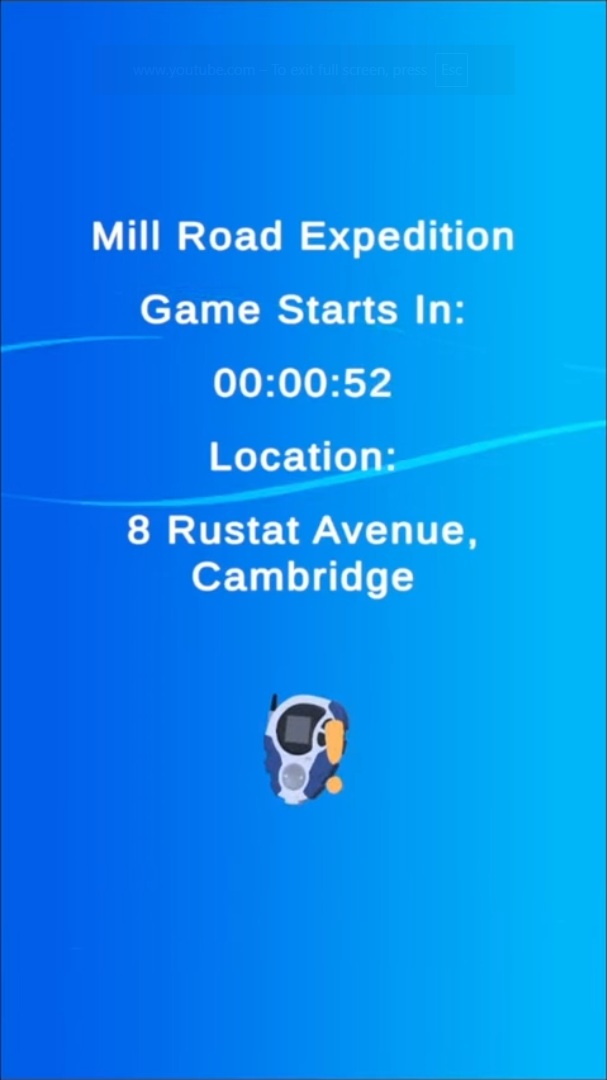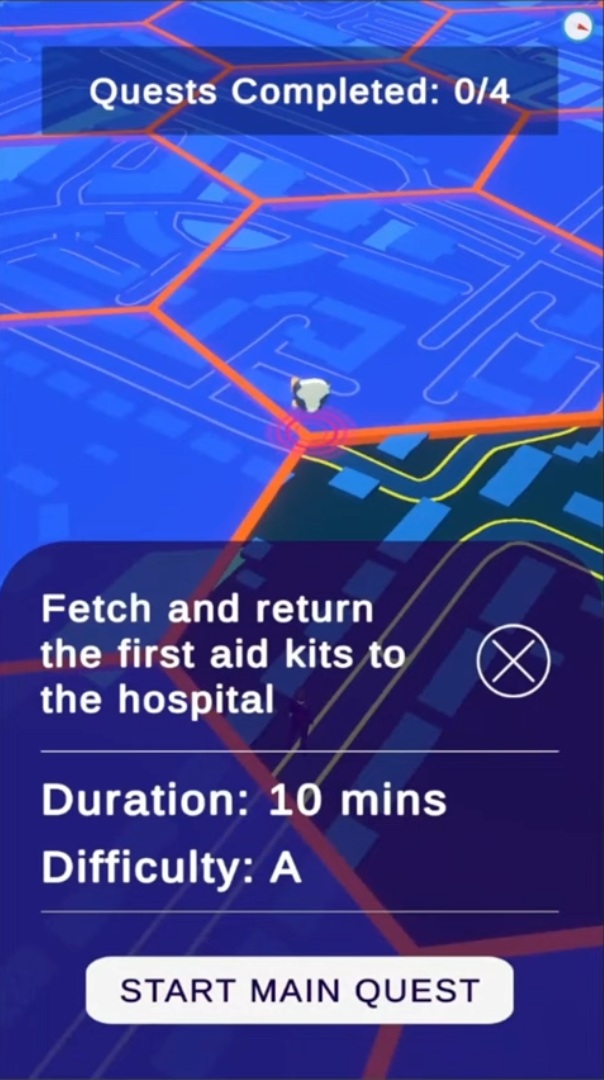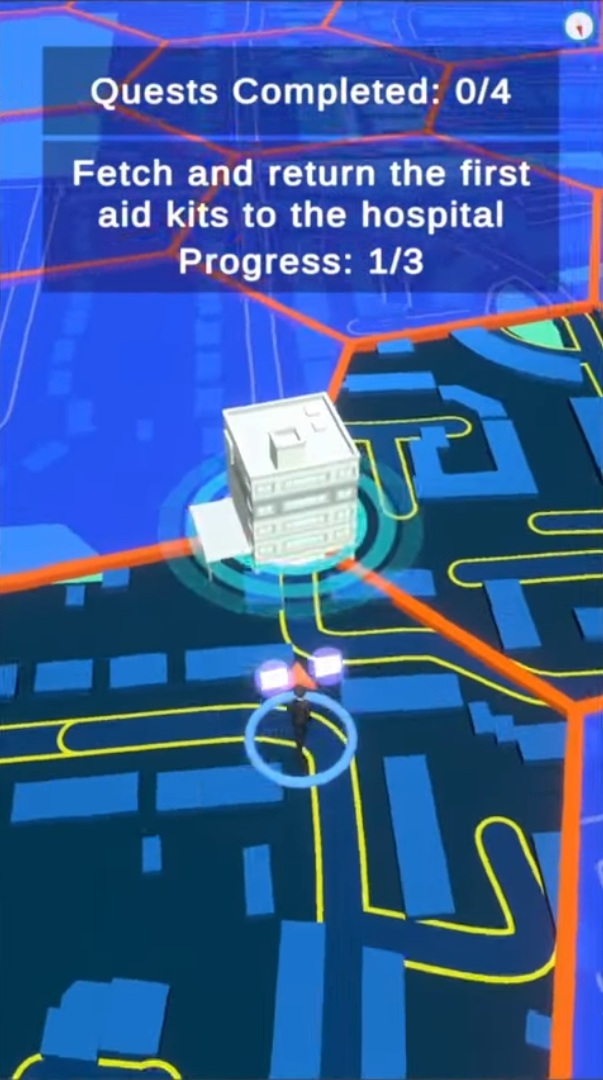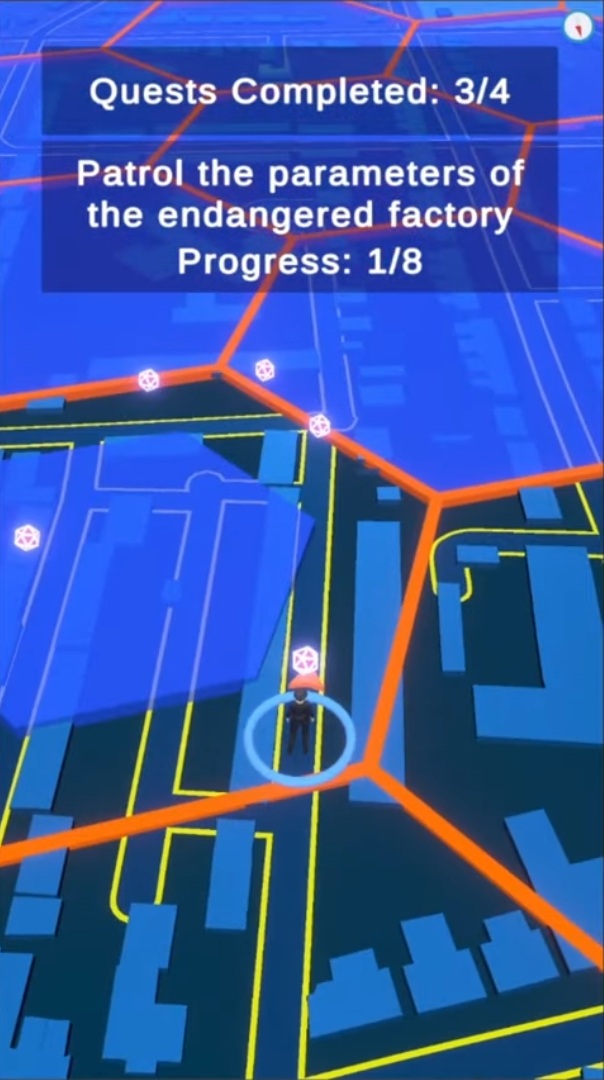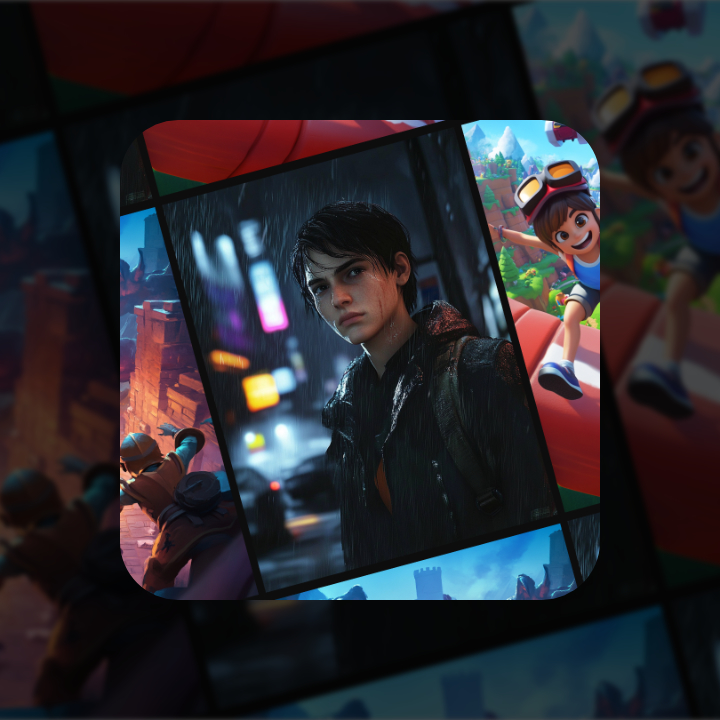
In an era where mobile games are often solitary or social only via screens, Quest Revolution brings competition and camaraderie back into real life. It transforms familiar physical environments into a competitive real-world RPG: players gather at a meeting point, wait for the countdown to finish, then race through the area to complete location-based quests. As players explore their surroundings, they navigate real terrain, make strategic decisions, and compete to be the first to complete all quests.
Built in Unity with the Mapbox SDK, Quest Revolution uses real-world geography to drive gameplay — turning urban streets or open outdoor spaces into dynamic game arenas. Players interact using their smartphones, and gameplay blends exploration, strategy, and real-time competition. The experience invites social interaction and adventure in the physical world, with an added layer of fantasy through magical cards and player-versus-player card battles.
We aimed to create a mobile-first, geo-location-based RPG that merges real-world exploration with immersive, multiplayer competition. The design focuses on balancing accessibility (simple mechanics + smartphone-based play) with depth (strategy, quests, real-time tension).
The user journey is straightforward yet exciting: meet-up → countdown → explore → quest-complete → victory (or intense competition). This simplicity ensures anyone — casual or core gamers — can jump in quickly, while the layered mechanics (cards, magic, strategy) provide depth for those who want it.
By leveraging Mapbox for real-world mapping and Unity for gameplay logic, we built a system that feels familiar (similar to popular AR/geo games) yet stands out by combining time pressure, competitive goals, and real-life social interaction.
Translating Virtual RPG Mechanics Into Real-World Geography
Real-world environments are unpredictable — GPS inaccuracies, variable terrain, and inconsistent user surroundings.
→ We used Mapbox SDK for robust geolocation and map loading, and built smoothing & validation logic to ensure quests register reliably even with GPS noise.
Balancing Accessibility with Depth
Too simple — the game feels trivial; too complex — newcomers get overwhelmed.
→ We adopted a hybrid design: core mechanics are easy to grasp (explore & collect), while strategic layers (card battles, magic, timing) provide depth as players get more invested.
Motivation & Engagement Without AR/VR Hardware
Without AR overlays or special gear, players might perceive the game as just “walk and tap.”
→ We emphasized social competition, time-bound urgency, and the thrill of being first to finish — transforming ordinary surroundings into zones of tension and excitement.
Ensuring Fairness Across Diverse Play Environments
Urban players might have more quests nearby than park-based players, potentially unbalancing the game.
→ We built dynamic quest placement logic that adapts to environment density — ensuring each player has equitable opportunities regardless of location context.